Dunamu Says 3 Research Papers Accepted at Financial AI Conference ICAIF 2026
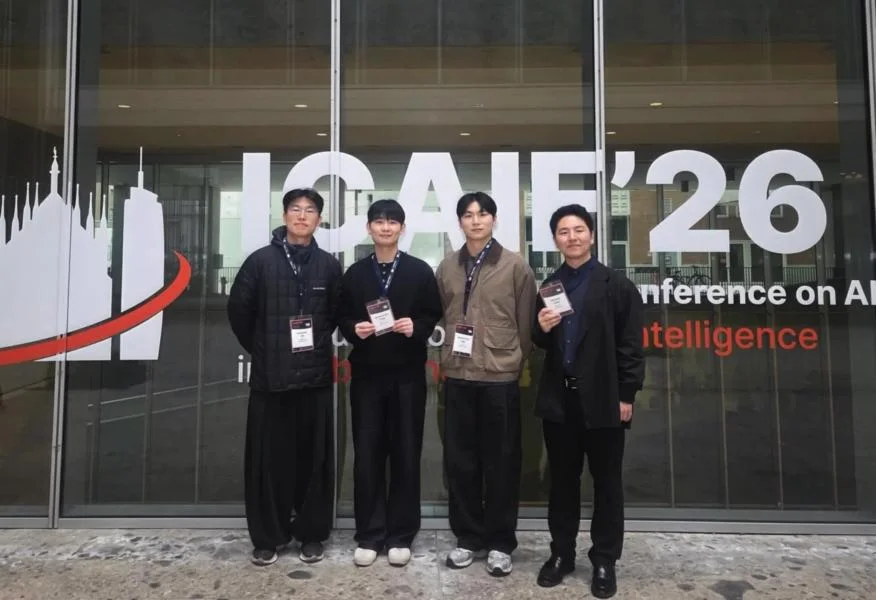
Dunamu, the operator of digital-asset exchange Upbit, said on Nov. 17 that three of its research papers had been accepted at ICAIF 2026, an international academic conference on financial artificial intelligence. One paper was selected for the main conference and two were accepted for specialized workshops.ICAIF is an international conference dedicated to financial AI and is organized by the Association for Computing Machinery, or ACM. Global financial and payments companies including BlackRock, JPMorgan, Visa, Mastercard and Standard Chartered participate. This year's event, held at Bocconi University in Milan, Italy, from Nov. 14 to Nov. 17, received more than 1,000 paper submissions, the highest on record. The acceptance rate for the main conference was about 22%.Dunamu's papers focused on research aimed at improving the accuracy and reliability of data analysis in exchange wallet identification, digital-asset classification and blockchain fund tracing. Among them, the exchange wallet identification technology has been partially applied to Upbit Data Lab's blockchain analytics service.The paper accepted to the main conference, "Classifying On-Chain Behavioral Characteristics of Ethereum-Based Centralized Exchange Wallets Using Proof of Reserves," presented a machine-learning methodology for identifying exchange wallets. Researchers including Park Sung-chan of Dunamu's quant team analyzed about 3.03 million Ethereum wallet addresses using proof-of-reserves data disclosed by 15 exchanges. The study derived 58 behavioral characteristics, including transaction patterns, token transfers and gas usage.In tests on wallets from exchanges that were not used for training, the model recorded an average PR-AUC of 0.9594, a classification performance metric. A score closer to 1 indicates better classification performance. Dunamu said the findings confirmed the potential to identify previously unknown exchange wallets. The technology is already being used in part by Upbit Data Lab to analyze holdings by participant type, including exchanges, whales and foundations.A workshop paper titled "Semantic Translation for an Institutional Digital Asset Classification System" examined how to classify digital assets by their actual use through analysis of smart-contract code with a large language model, or LLM. Researchers including Jeon Hyun-ho, head of Dunamu's quant team, conducted experiments on Ethereum-based decentralized finance protocols including Uniswap, Aave and Curve. After converting code into natural language and classifying it by financial function, 16 of the 17 cases analyzed matched existing classification standards.A key feature of the methodology is that humans can directly review and verify the basis for the AI's classifications. The researchers plan to apply the technology to further enhance the Upbit Digital Asset Classification System, or UBCS.Another workshop paper, "Bounds on Estimating the Use of Deposited Funds Under Incomplete Transaction Records," dealt with the information and conditions needed to reliably analyze fund flows when transaction records are incomplete. Researchers including Kim Sung-yong, a project leader on Dunamu's FDI team, and So Min-seop, head of the FDI team, identified key information supporting the reliability of source-of-funds analysis through Ethereum wallet transaction case studies and blockchain execution experiments.Dunamu said the research provided a technical basis for improving the analytical reliability of its on-chain fund-tracing solution, OTS. It plans to use the findings to further advance AI-based fund tracing and financial-crime analysis technologies.Kim Dae-hyun, Dunamu's chief data officer, said the research was significant because it confirmed the potential for AI to analyze blockchain data with greater precision and improve the reliability of the results. He added that the company would continue research combining AI and blockchain technology to lead technological innovation in the digital-asset industry.