Japan Megabanks Test First Joint Yen Stablecoin: Where Does XRP Fit?
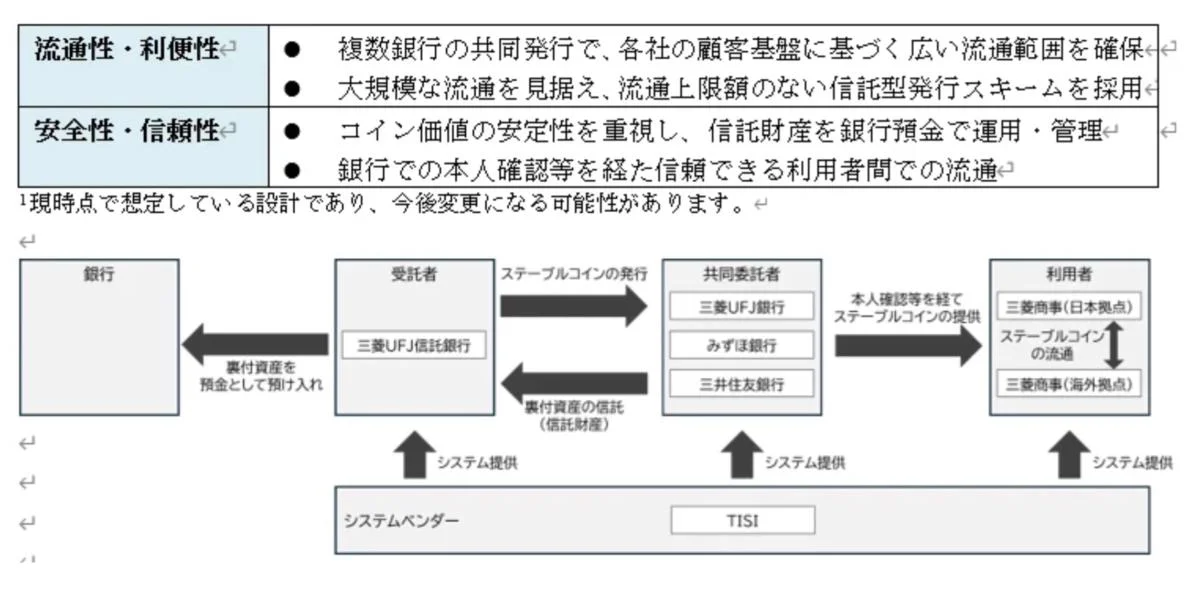
Japan's largest megabanks (MUFG, Mizuho, and SMBC), together with Mitsubishi UFJ Trust and TISI Inc., have officially reported the successful completion of the first joint trials of a yen stablecoin.As part of a closed pilot project supervised by the state Financial Services Agency (FSA), the partners tested cross-border settlements for the trading giant Mitsubishi Corporation. The stablecoins, issued with the status of "trust beneficiary rights," went through the full cycle from issuance to final redemption into fiat without failures.The commercial launch of the system is planned before the end of the current fiscal year.What does XRP have to do with it? (Actually, quite a lot)Officially, Ripple is not mentioned in the consortium's documents. However, in the context of the Japanese market, this test is inevitably viewed through , since all of the "big three" megabanks have a deep history of integration with Ripple's technologies. Any banking blockchain initiatives in the country largely rely on the foundation laid by this network over many years.Back in 2017, MUFG, Mizuho, and SMBC joined a large-scale banking consortium under the auspices of SBI Ripple Asia, created to implement RippleNet technologies for instant domestic and cross-border settlements. This institutional link continues at the present stage.Not long ago, as part of Japan's financial infrastructure innovation program, Mizuho Bank and SMBC's investment arm concluded to deploy real-world asset (RWA) tokenization infrastructure and institutional DeFi solutions specifically on the XRP Ledger.The launch of their own digital yen on the Progmat platform (created by MUFG on the Avalanche blockchain) looks like an attempt by the megabanks to build an isolated alternative to external liquidity bridges such as XRP, in order to fully control compliance and fees within the traditional banking vertical.The resulting configuration points to a possible division of the market in the future. On the one hand, the closed infrastructure of the megabanks and the Progmat platform will likely try to take over the conservative sector of intra-corporate B2B transfers.On the other hand, the parallel launch of Ripple's regulated dollar stablecoin RLUSD by SBI Holdings and the well-developed liquidity of XRP may preserve dominance in cross-border retail and open fintech services.The mutual integration of banking platforms with the Web3 industry, including their participation in XRP Tokyo summits, does not rule out a scenario in which the commercial launch of the digital yen will not displace XRPL, but may instead lead to the formation of a segmented landscape where corporate fiat and open digital assets coexist at the level of liquidity gateways.