Ripple CTO Emeritus Warns Against AI Content Filters in XRP Scam Debate
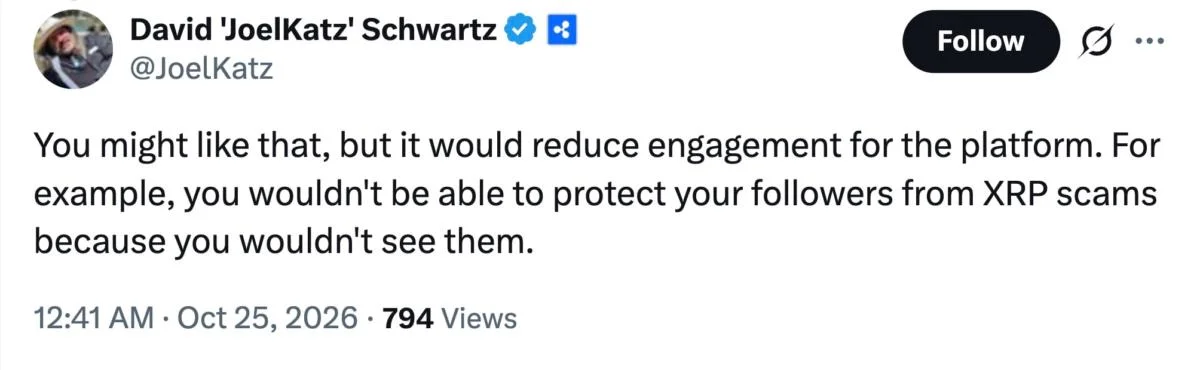
A major lawsuit filed by the state of Rhode Island against Meta Platforms has caused a split in Silicon Valley over the question of platforms' responsibility for the actions of scammers. Ripple's CTO Emeritus David Schwartz has intervened in the dispute. One of the main architects of the openly spoke out against total algorithmic content filtering, stating that attempts to create a "safe vacuum" will destroy freedom of speech and paralyze the collective defense of the internet community.The occasion for the statement was a debate on the social network X. Users proposed obliging platforms to implement strict filters that would completely cut scam advertising and posts with XRP scams out of the personal feed — in particular, aggressive schemes of fake "2-for-1 XRP giveaways."Schwartz's response outlined a pragmatic and tough approach to cybersecurity.According to the developer, the personal isolation of experts from spam creates a dangerous information vacuum: having hidden fraud from view, opinion leaders lose the ability to promptly identify new threats and publicly warn the industry about them.Schwartz himself regularly illustrates this thesis by manually identifying phishing attacks in the ecosystem and promptly bringing them to the public's attention.On the harm of a sterile internetThis logic directly echoes Schwartz's position on the lawsuit by the Rhode Island attorney general, who accused Meta of knowingly deriving revenue from scam advertising optimized by internal AI tools. The former Ripple CTO called the automatic removal of materials by AI filters based solely on the "probability of deception" a dead-end path that will inevitably lead to the hidden censorship of millions of legal posts protected by the First Amendment to the U.S. Constitution.Schwartz compared the authorities' attempts to shift the blame onto IT giants to holding restaurants liable for serving food to terrorists, stating that the law should prosecute exclusively the authors of criminal schemes.While regulators demand sterility from the IT industry, Web3 creators argue that in current realities, the only working shield against scams remains not an algorithm, but the transparency of the environment and the vigilance of the community itself.