XRP Unveils Quantum Security Plan That Could Cost $255,000
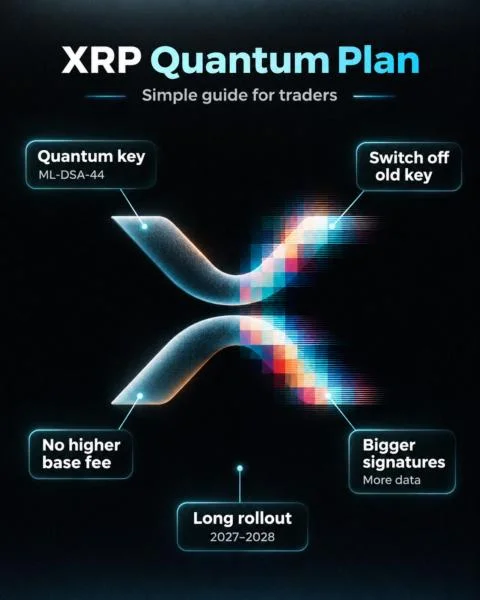
The XRP Ledger Foundation has mapped out a plan for quantum-proof accounts. The upgrade would protect users from future quantum attacks without raising their transaction fees.However, the proposal still faces several technical hurdles and a long development timeline before launch.XRP Quantum Proposal ExplainedA quantum-proof account is a wallet secured by a signature scheme cannot easily break. It protects funds even if attackers obtain powerful quantum hardware.The threat comes from how blockchains verify ownership. “Every time an account signs a transaction, it reveals a public key,” the XRP foundation study explains. Therefore, any account that has sent a payment remains exposed. The foundation published the design in its 2027 protocol roadmap. These are the key points:New keys: Owners could add a quantum-resistant key based on ML-DSA-44, a scheme NIST approved in 2024.Safer switch: Users could then switch off their original, potentially exposed key.No extra fees: Base transaction fees stay unchanged, while validators absorb the additional storage.Heavier data: A quantum-resistant key and signature take up 3,732 bytes, versus 105 bytes for a regular payment.Timeline: Development and auditing could follow in late 2027 or 2028, after a migration study.However, developers still need to fix a key-generation mismatch between the Python prototype and other versions.Auditing this amendment alone could cost up to $255,000.Which Other Crypto is Preparing for Quantum Threats?The XRP Ledger is not alone. Several major networks , the moment quantum computers break current cryptography:Bitcoin: BIP-360, merged in February 2026, proposes a quantum-resistant output type. It remains inactive on the main chain.Ethereum: The Ethereum Foundation formed a post-quantum team in January 2026. Its roadmap phases in protections through 2030.Algorand: The network has used Falcon signatures for State Proofs since 2022. It now supports Falcon-backed accounts.Solana: Blueshift launched Winternitz Vault, which stores funds with quantum-resistant one-time signatures.Still, most of these efforts remain roadmaps, not live, network-wide protections.