Zcash (ZEC), Hyperliquid (HYPE), Monero (XMR) Push Out Cardano (ADA) and Chainlink (LINK) From Top 10
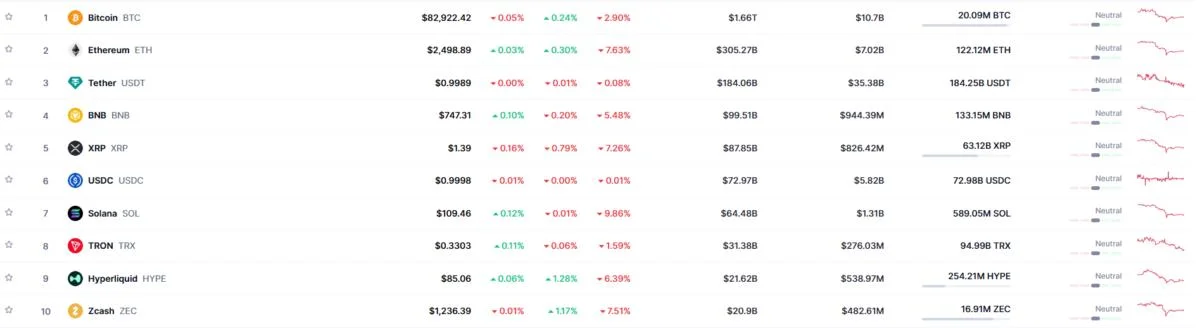
A year ago, the top 10 non-stablecoin cryptocurrencies looked very different. Three coins have pushed their way in, and two older names have dropped out.Stablecoins such as Tether and USDC are left out of this list. Among the others, the top 6 stayed the same: Bitcoin, Ethereum, BNB, XRP, Solana, and TRON.The biggest changes. It is now trading near $1,232 with a market value of about $20.8 billion.Monero (XMR) also entered the list. It trades near $530, with a market value close to $10 billion.Hyperliquid (HYPE) climbed higher. It trades near $85 with a market value of about $21.6 billion.Cardano and Chainlink fell out. ADA trades near $0.25 and LINK near $12.86.The shared post reports that ZEC gained about 441% over the year, HYPE about 127%, and XMR about 77%. It says ADA fell about 61% and LINK about 25%. Those percentages come from the post; the table checked shows current prices only.The post also says . It reports BTC, ETH, SOL, BNB, and XRP falling between 27% and 42%. Those are the biggest losses in the group, and they explain why the list shifted toward smaller, faster-moving names.What are the implications?Rankings change when investors move money from older coins into newer or more niche ones. Privacy coins like ZEC and XMR, along with HYPE, led this year, which suggests that some traders are willing to take on more risk in exchange for the chance of larger gains.Cardano and Chainlink lost ground, possibly because their recent developments and adoption did not generate the same excitement. Top 10 lists can change quickly, so a coin that climbs into the list does not always stay there.Those rankings also depend on the price data used at the moment of measurement, so a move of only a few days can reshuffle the list. Watch the market value gap between the 10th and 11th spots if you want to see whether this shift holds, since a narrow gap means the order could flip again with a small price move.